
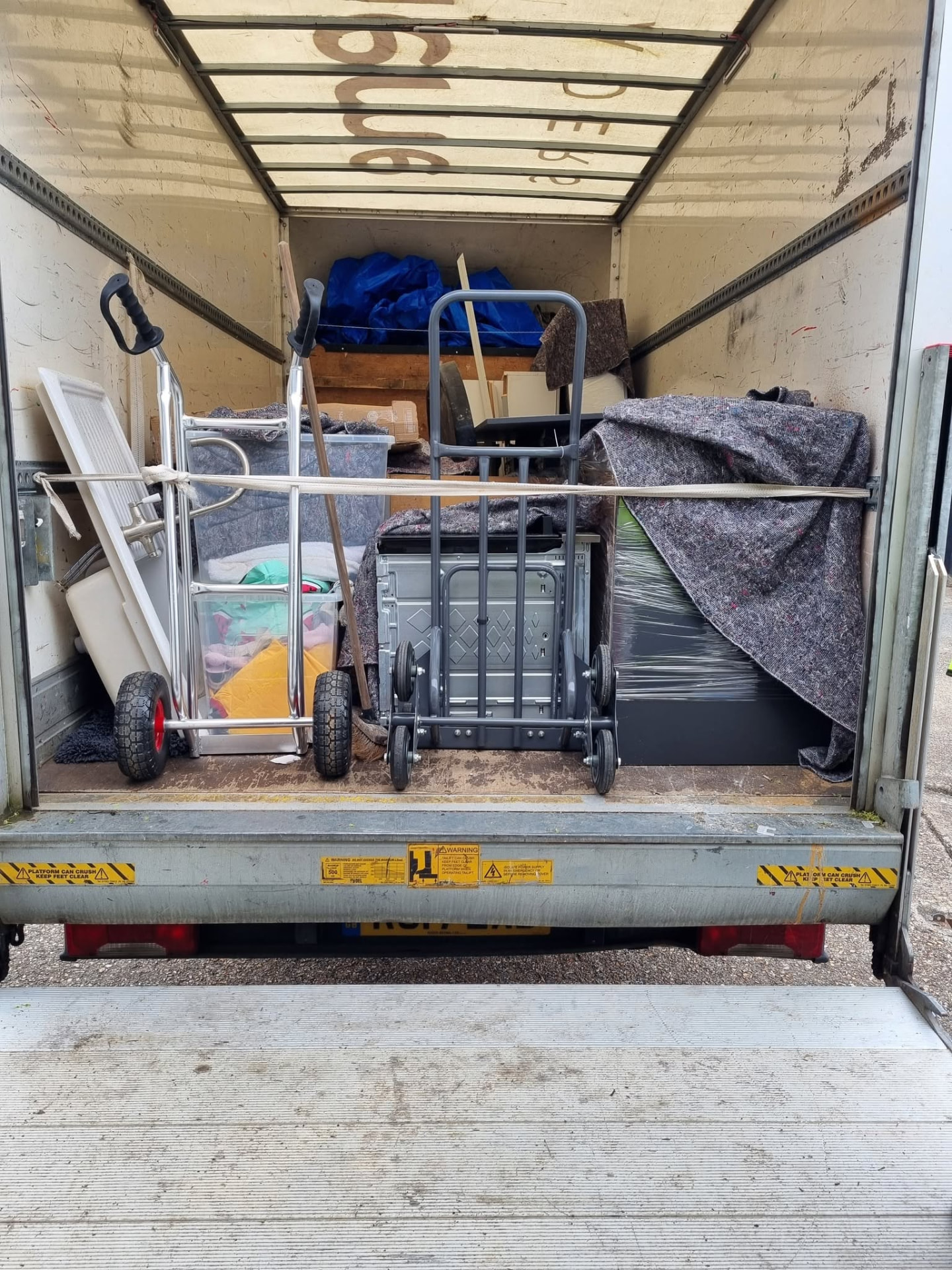
Moving day itself is the easy part if the four weeks in front of it were used properly. What turns a smooth move into a long one is almost never the lifting. It is a bay suspension that was never applied for, a loft nobody emptied, or a completion time that slipped by three hours and left a loaded van sitting outside a house with no keys.
This checklist is written around how moves actually run in Hampshire and Berkshire — where completion times, permit parking and the M3 and A34 peaks all have a habit of deciding the day for you.
What should I do four weeks before moving?
- Book the removal firm and get the date and arrival time confirmed in writing
- Tell your landlord, letting agent or solicitor the date
- Start disposing of anything you do not want to pay to move — charity shops book collections out weeks ahead
- Notify energy, water, broadband, council tax, bank, insurers and the DVLA
- Set up Royal Mail redirection — it takes several working days to activate
- If you rent, ask your agent for a copy of the check-in inventory now, not later
What should I do two weeks before?
Start packing the rooms you barely touch: spare bedrooms, books, out-of-season clothes, decorations. Label boxes with the destination room rather than the source room — future you, standing in a hallway, needs to know where a box is going, not where it came from.
Then clear the loft, the shed and the garage. Every removal firm will tell you the same thing: these three are forgotten in roughly half of all quotes and together they account for about a third of the volume. Finding them on the morning is how a single van-load becomes two.
What should I sort one week before?
- Confirm arrival time and access with the removal firm
- Apply for any visitor permit or bay suspension — councils typically need several working days
- Book the lift if either address is a flat, and check whether the building restricts move hours
- Confirm with your solicitor when keys are actually expected to be released
- Run the freezer down and eat what is in the fridge
- Arrange care for children and pets on the day itself
The permit point matters more here than people expect. Caversham, central Winchester and the terraces around Aldershot station are all resident-permit with no driveways, and Basingstoke's town-centre loading bays have short waiting limits. A permit applied for on the Monday is fine; one thought of on the Friday is not.
What goes in the essentials box?
One box that travels in your car, never in the van. Kettle, mugs, tea, coffee, milk, snacks. Phone chargers. Medication. Toilet roll, hand soap, a couple of cloths and a bin bag. A change of clothes each. Scissors, a screwdriver and a torch. Every document connected to the move. Bedding for the first night.
What should I do on moving day itself?
- Photograph the gas, electricity and water meter readings before you leave
- Keep keys, passports, jewellery and documents with you, not in the van
- Walk every room, cupboard, loft, shed and garage before the van doors close
- Take photos of the empty property — useful evidence if a deposit is later disputed
- Take readings again at the new address as soon as you arrive
- Get the beds rebuilt first; everything else can wait until tomorrow
What if completion runs late?
It happens often enough that you should plan for it. Keys frequently do not release until the afternoon, and occasionally not at all on the intended day. Talk to your removal firm about it in advance rather than at 4pm: a loaded van can usually wait a few hours, and an overnight hold is far less stressful when it was discussed as a possibility a week earlier.
Summary
Book early, empty the loft, sort the parking, and keep an essentials box in your own car. Do those four and moving day becomes a day of carrying boxes rather than a day of solving problems.