
The names do not help. Man and van sounds like one person with a small van, and a full removal sounds like a fleet and a team in uniform. In practice the difference is much simpler: how much is moving, how long it will take, and how much of the lifting someone else is doing.
What man and van actually means
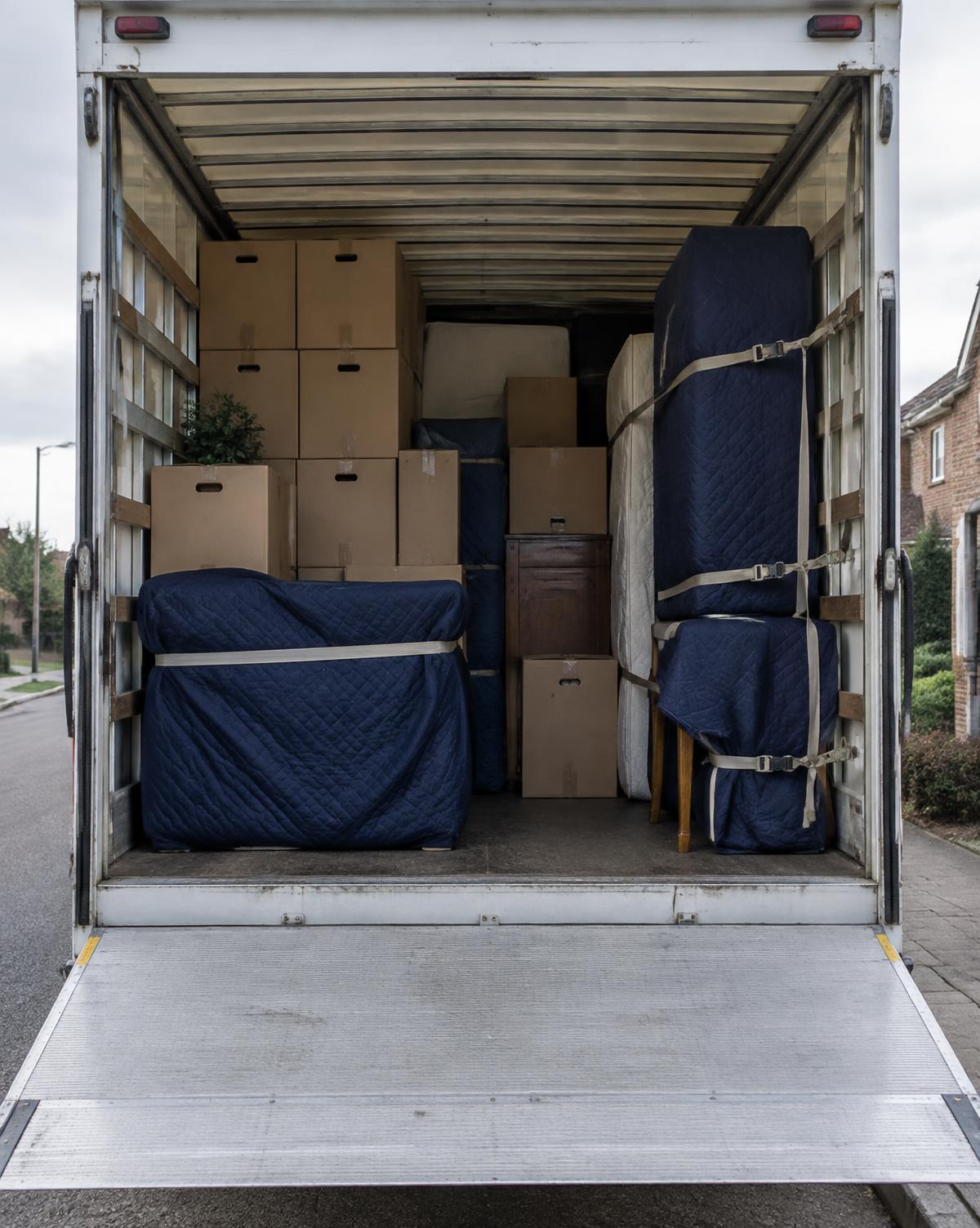
One driver, usually a second pair of hands where the job needs it, and a single van-load. Booked in hours rather than days. A Luton with a tail lift — which is what we run — holds roughly the contents of a studio or a small one-bed flat, including a sofa and a double bed.
It suits single items, part-loads, a bedroom going into a house-share, collections from a seller, and small flats where nothing needs extensive dismantling.
What a full removal means
A crew for the whole day, a planned load order, dismantling and reassembly as standard, wrapping for everything that can scuff or break, and the expectation that they finish the job whether it takes six hours or eleven.
It suits anything from a two-bedroom property upwards, moves with a fixed completion time, houses with stairs or difficult access, and anyone who simply cannot spend the day carrying boxes.
The simple test
Walk through the property and answer four questions honestly:
- Will it all genuinely fit in one van-load, including the loft and the shed?
- Does any furniture need taking apart to get out of the door?
- Is there a fixed time you must be out by, or keys changing hands?
- Are you physically able and willing to carry alongside the crew?
One van-load, nothing to dismantle, a flexible day and willing hands — that is a man and van. Two or more of those answers going the other way and you want a full removal, because the job has stopped being a couple of hours of carrying.
Cost: the honest comparison
- Man and van, local: roughly £60 – £350 depending on the load and distance
- Full removal, one to two bedrooms: roughly £200 – £700
- Full removal, three bedrooms: roughly £350 – £1,000
The trap is the false economy. Booking man and van for a two-bed house because it is cheaper on paper usually means two or three trips, a day that runs into the evening, and a final bill within touching distance of the removal quote — with you doing half the work.
If you are seriously debating a second trip, you have already answered the question. A second trip is a full removal wearing a disguise.
The things people underestimate
The loft, the shed and the garage
Between them they are frequently a third of the total volume, and they are almost never mentioned when someone describes their move on the phone. Open all three before you decide which service you are booking.
Stairs
A first-floor flat with no lift can add hours. Not because a sofa cannot go down stairs, but because every single item does, one at a time, and a hundred small journeys add up.
Your own energy
People budget for the van and forget that they will have been packing until two in the morning. Being the second lifter on your own move at four in the afternoon is how things get dropped.
When neither is quite right
There is a middle option most people do not ask about: a full crew for a half-day. It suits a one-bed flat with a difficult staircase, or a two-bed where you have already moved the boxes yourself and only the furniture is left. If your job sits between the two categories, say so when you ask for a quote rather than guessing upwards.
One last thing worth checking
Whichever you book, ask whether the firm is insured and whether dismantling is included. Those two questions separate a proper operation from a van and an optimist, and they cost nothing to ask.